Easy Bibingka Recipe: Filipino Rice Cake for Christmas
Bibingka is one of the most beloved Filipino kakanin, especially during the Christmas season. This soft, fluffy, slightly sweet rice cake is traditionally enjoyed after Simbang Gabi or Misa de Gallo, often while warm and paired with hot coffee or salabat. Its delicious combination of rice flour, coconut milk, butter, salted egg and cheese makes every bite comforting and nostalgic.


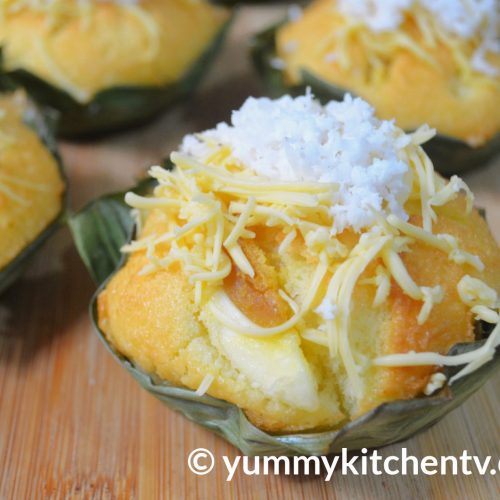
Easy Filipino Bibingka
Equipment
- Mixing bowls
- Whisk
- Measuring cups and spoons
- Banana leaves
- Small round baking or muffin molds
- Baking tray
- Oven
Ingredients
For the Bibingka Batter:
- 1 cup rice flour
- ¼ cup glutinous rice flour
- ½ cup sugar
- 1½ teaspoons baking powder
- 1 egg
- ¼ cup melted butter
- ¾ cup coconut milk
For the Toppings:
- Salted egg sliced
- Grated cheese
- Grated coconut
- Sugar as desired
- Extra butter or margarine optional
Instructions
- Prepare the banana leaves. Wash and dry the banana leaves. Briefly heat them over a stove flame or warm pan until slightly wilted and flexible. Cut them into pieces large enough to line your molds.
- Line the molds. Place the softened banana leaves inside small round baking or muffin molds. Trim any excess leaf that extends too far beyond the edges.
- Mix the dry ingredients. In a large bowl, combine the rice flour, glutinous rice flour, sugar, and baking powder. Mix well.
- Mix the wet ingredients. In a separate bowl, whisk together the egg, melted butter, and coconut milk until well combined.
- Make the batter. Gradually add the wet mixture to the dry ingredients. Whisk until smooth and well blended. Make sure there are no large lumps, but avoid overmixing.
- Fill the molds. Pour the batter into the banana-leaf-lined molds, filling each about three-quarters full.
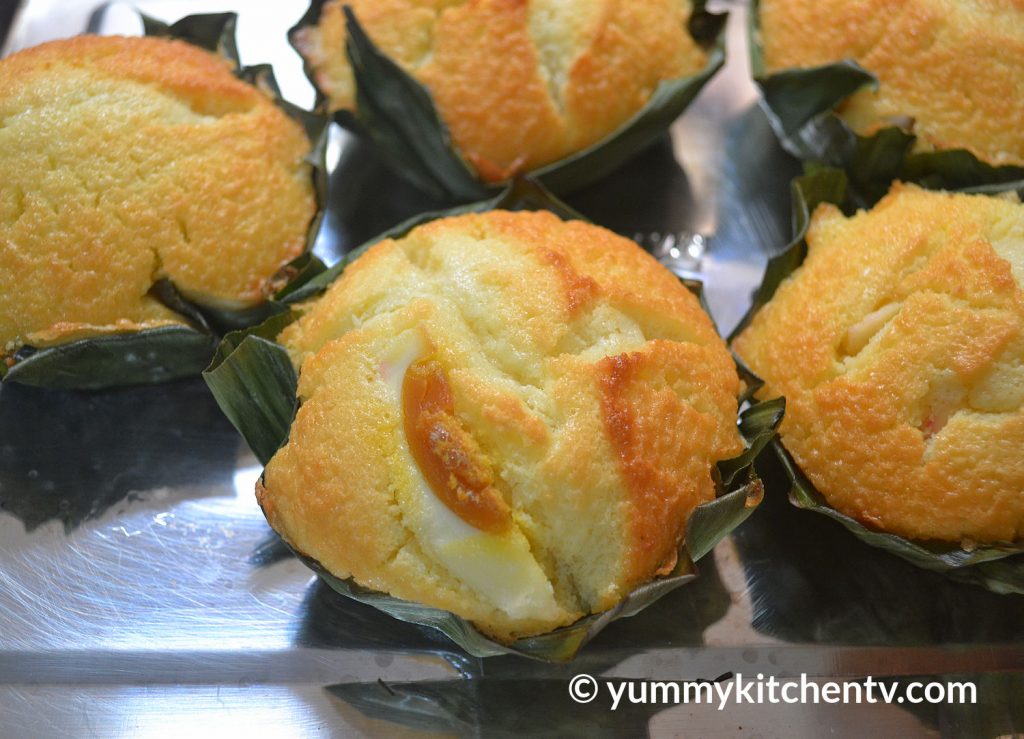
- Add toppings. Arrange slices of salted egg and a little grated cheese over the batter.
- Bake. Preheat the oven to 200°C. Place the molds on a baking tray and bake for 15 to 20 minutes, or until the bibingka is set and lightly golden on top.
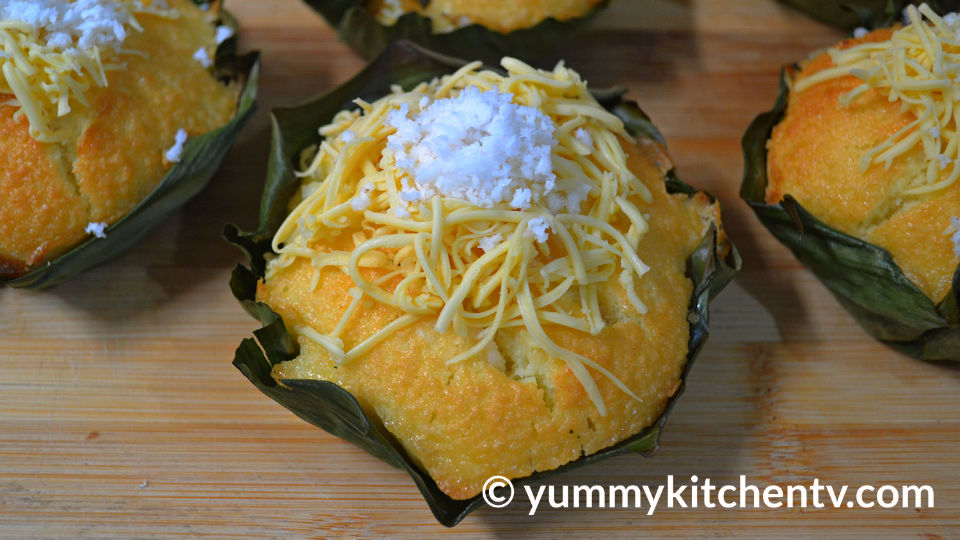
- Finish the bibingka. Remove from the oven and brush the surface with a little butter or margarine if desired. Top with additional grated cheese, grated coconut, and sugar.
- Serve. Serve the bibingka warm and fresh, preferably with hot coffee, tea, or salabat.
Notes
- Banana leaves: Briefly heating the leaves makes them flexible and easier to use as molds.
- Coconut milk: Fresh coconut milk provides a rich, traditional flavor, but canned coconut milk can also be used.
- Do not overmix: Mix the batter just until smooth to help keep the bibingka tender.
- Do not overfill: Leave room for the batter to rise during baking.
- Check doneness: The bibingka should be set in the center and lightly golden on top.
- Classic toppings: Salted egg, cheese, grated coconut, butter, and sugar create the familiar sweet-and-savory bibingka flavor.
- For the best experience: Serve the bibingka warm, straight from the oven, with a cup of coffee or hot salabat.
Nutrition
For many Filipinos, bibingka is more than a dessert. The smell of freshly cooked rice cake outside a church, the warmth of charcoal, banana leaves, melted butter and savory toppings can bring back wonderful holiday memories.
Traditional bibingka is cooked in a clay pot with charcoal underneath and on top. But you do not need special equipment to enjoy it at home. This easy oven-baked version gives you the familiar soft rice cake and classic toppings using equipment already found in most kitchens.

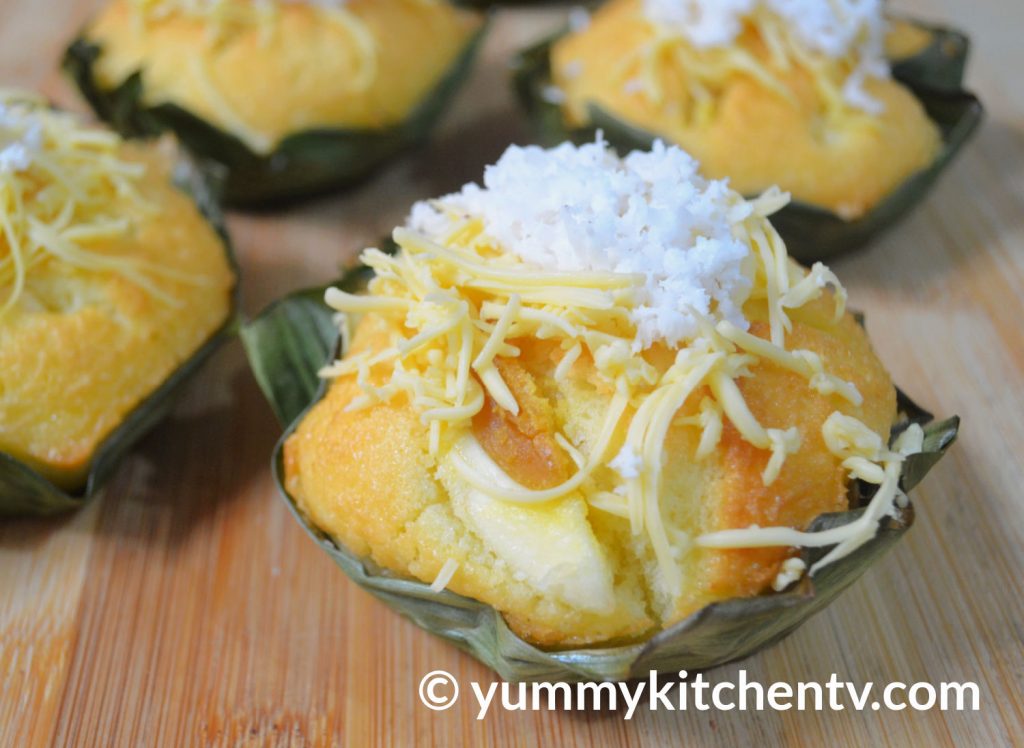
Watch how to Cook Bibingka
What Is Bibingka?

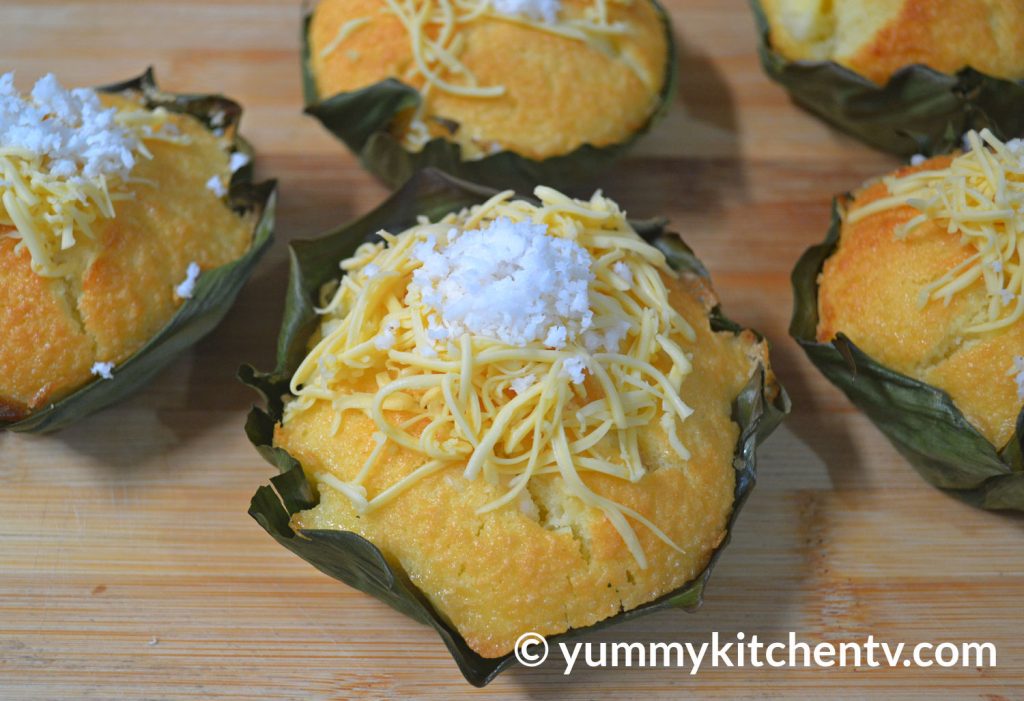
Bibingka is a Filipino baked rice cake made mainly from rice flour or galapong. It has a tender, slightly spongy texture and a mildly sweet flavor. The top is commonly finished with salted egg, grated cheese, butter, sugar and grated coconut.
It is especially popular from November through December, when vendors sell it near churches during the Christmas novena masses. Many people buy a warm piece after Simbang Gabi and enjoy it for breakfast or as an evening snack.
Bibingka belongs to the Filipino family of kakanin. Different regions and families may prepare it differently, but the familiar Christmas-style version is known for its rice-based batter, banana-leaf lining, and sweet-and-savory toppings.
Why You’ll Love This Bibingka Recipe
This homemade bibingka is perfect for the holidays, but it is delicious enough to make any time of year.
The ingredients are simple and accessible. Rice flour gives the cake its characteristic flavor, while glutinous rice flour helps create a soft, tender texture. Coconut milk adds richness and a pleasant aroma, while butter brings a comforting buttery taste.
The toppings make the recipe even better. Salted egg and cheese provide a savory contrast to the slightly sweet cake. Grated coconut and sugar add more texture and flavor, creating the familiar combination associated with Filipino Christmas.
Most importantly, the oven method is convenient. You can enjoy homemade bibingka without a clay pot, charcoal, or a traditional outdoor setup.
Ingredients
For the batter:
- 1 cup rice flour
- ¼ cup glutinous rice flour
- ½ cup sugar
- 1½ teaspoons baking powder
- 1 egg
- ¼ cup melted butter
- ¾ cup coconut milk
For the toppings:
- Salted egg, sliced
- Grated cheese
- Grated coconut
- Sugar, as desired
- Extra butter or margarine, optional
Preparing the Banana Leaves
Banana leaves give bibingka its distinctive aroma and traditional appearance. Wash the leaves thoroughly and dry them before using.
Briefly heat each leaf over a stove flame or warm pan until it becomes flexible and slightly wilted. Avoid burning the leaves. Cut them into pieces large enough to line your molds, then place one inside each mold and trim away excess.
Small round baking molds, muffin molds, or other oven-safe containers can be used. If banana leaves are unavailable, parchment paper or lightly greased molds will work, although the banana leaves provide a more traditional result.
How to Make Bibingka
1. Combine the Dry Ingredients
In a large mixing bowl, combine the rice flour, glutinous rice flour, sugar, and baking powder. Stir well so everything is evenly distributed.
2. Mix the Wet Ingredients
In another bowl, whisk together the egg, melted butter, and coconut milk. If the butter was freshly melted, allow it to cool slightly before adding it to the egg.
3. Make the Batter
Gradually pour the wet ingredients into the dry mixture. Whisk until smooth and well blended. Break up any large lumps, but avoid overmixing. The batter should be smooth and pourable.
4. Fill the Molds
Arrange the banana-leaf-lined molds on a baking tray. Pour the batter into each mold, filling it about three-quarters full. This gives the bibingka room to rise.
Place slices of salted egg and a little grated cheese over the batter.
5. Bake the Bibingka
Preheat the oven to 200°C. Bake for 15 to 20 minutes, or until the bibingka is set and the surface is lightly golden.
Cooking time depends on the size and depth of your molds. Smaller portions may cook faster, while thicker cakes may need additional time.
6. Add the Final Toppings
Remove the bibingka from the oven and brush the surface with a little butter if desired. Add grated cheese, grated coconut, and a sprinkle of sugar.
Serve fresh and warm.

Tips for the Best Bibingka
Use good-quality coconut milk. Fresh coconut milk gives the bibingka a rich flavor and pleasant aroma. Canned coconut milk is also convenient; stir it well before measuring if the cream has separated.
Do not overfill the molds. The batter rises as it bakes, so keeping the molds around three-quarters full helps prevent spills.
Avoid overbaking. Bibingka should be tender and soft inside. Baking it for too long can make the rice cake dry.
Watch the top carefully. If you want a more golden surface, you can briefly use the oven’s top heat or broiler near the end. Watch closely because the cheese and sugar can brown quickly.
Adjust the sweetness. The cake itself is mildly sweet, while the toppings add more flavor. Add extra sugar on top if you prefer a sweeter bibingka.

Traditional Bibingka vs. Oven-Baked Bibingka
Traditional Filipino bibingka is cooked in a clay pot lined with banana leaves. Hot charcoal is placed underneath and another layer is positioned above, allowing the cake to cook from both directions. This method can give the bibingka a distinctive smoky aroma.
The oven method is much easier for modern home kitchens. It provides steady heat without charcoal or specialized cookware. Although it may not reproduce every detail of a charcoal-cooked bibingka, it creates the same comforting combination of tender rice cake, banana-leaf aroma, salted egg, cheese, coconut, and butter.
What Makes Bibingka Special?
One of the things that makes bibingka special is the balance of flavors and textures. The cake itself is gently sweet and soft, while the salted egg adds a pleasant salty bite. Cheese melts into the warm surface, creating creamy and savory notes that work surprisingly well with the rice-based cake. Grated coconut adds a fresh, slightly chewy texture, and a final brush of butter gives everything a rich finish.
The banana leaf is not simply decorative. It helps create the traditional look of bibingka and contributes a subtle aroma as the cake bakes. When you lift a freshly baked bibingka from its leaf, the warm fragrance immediately makes the kitchen feel festive.
For Filipino families, this combination often carries memories of Christmas traditions. Bibingka vendors outside churches, steaming cakes wrapped in leaves and warm drinks shared after Simbang Gabi are familiar holiday scenes for many people.
Even if you are making bibingka for the first time, the recipe is approachable. Prepare the batter carefully, bake until just set, and finish with your favorite toppings. The result is a homemade kakanin that feels special without requiring complicated techniques or expensive ingredients. It is a simple way to bring a little Filipino Christmas nostalgia to your table.


When to Serve Bibingka
Bibingka is strongly associated with the Christmas season and Simbang Gabi. It is commonly eaten after the early morning mass as breakfast, but it also makes a wonderful merienda or evening snack.
Serve it warm with coffee, hot chocolate, tea or salabat. It is also perfect for Christmas gatherings, family breakfasts, and holiday celebrations.
Individual portions make serving especially easy. Each bibingka can remain in its banana-leaf lining, giving the dish a charming traditional presentation.
Conclusion
This easy bibingka recipe brings one of the Philippines’ most cherished Christmas treats into your home kitchen. With rice flour, glutinous rice flour, coconut milk, butter, egg and classic toppings, you can make a soft and flavorful rice cake without a clay pot or charcoal fire.
The combination of sweet rice cake, salty egg, creamy cheese, grated coconut, and butter is what makes bibingka so memorable. Whether it reminds you of Simbang Gabi, Christmas mornings, or family gatherings, this Filipino kakanin is a delicious way to celebrate tradition.
Make a batch for your family, serve it fresh from the oven and enjoy a warm taste of Filipino Christmas anytime of the year.